 EN
EN
 INA
INA
Physics Program of Universitas Udayana Successfully Organizes School of Physics 2025
.jpg)
The development of physics today is increasingly rapid, both in theoretical and applied physics. This development is particularly evident in the branch of physics, namely materials physics. The latest technological advancements today are inextricably linked to the development of materials physics. The discovery of various renewable materials and their characterization technologies has opened up opportunities for innovative research in the field of nanometer-scale materials physics, often known as nanomaterials. Nanomaterials possess unique physical and chemical characteristics, making them potentially applicable in a wide range of fields.
Based on this, enrichment of physics knowledge in the field of nanomaterials is considered essential for students, lecturers, practitioners in the materials industry, and even interested high school students. This enrichment can be packaged in the form of School of Physics activities, namely a series of activities to share knowledge and practical research experiences in the field of nanomaterials. This activity is expected to promote study programs and open up opportunities for future research collaborations in the field of nanomaterials and their applications.
This year's School of Physics event featured the topic "Exploring the Beauty of Nanostructured Materials and Their Applications." The event, held from November 8, 2025, to January 17, 2026, featured 11 speakers from leading universities and research institutions in Indonesia.
This activity aims to: 1) Promote the field of expertise in material physics in the Udayana Physics Study Program and partner study programs (speakers); 2) Initiate research collaborations in the field of nanomaterials with speakers from various universities in Indonesia and industries outside Indonesia, and; 3) Improve the academic atmosphere in the Physics Study Program, Faculty of Mathematics and Natural Sciences, Universitas Udayana.
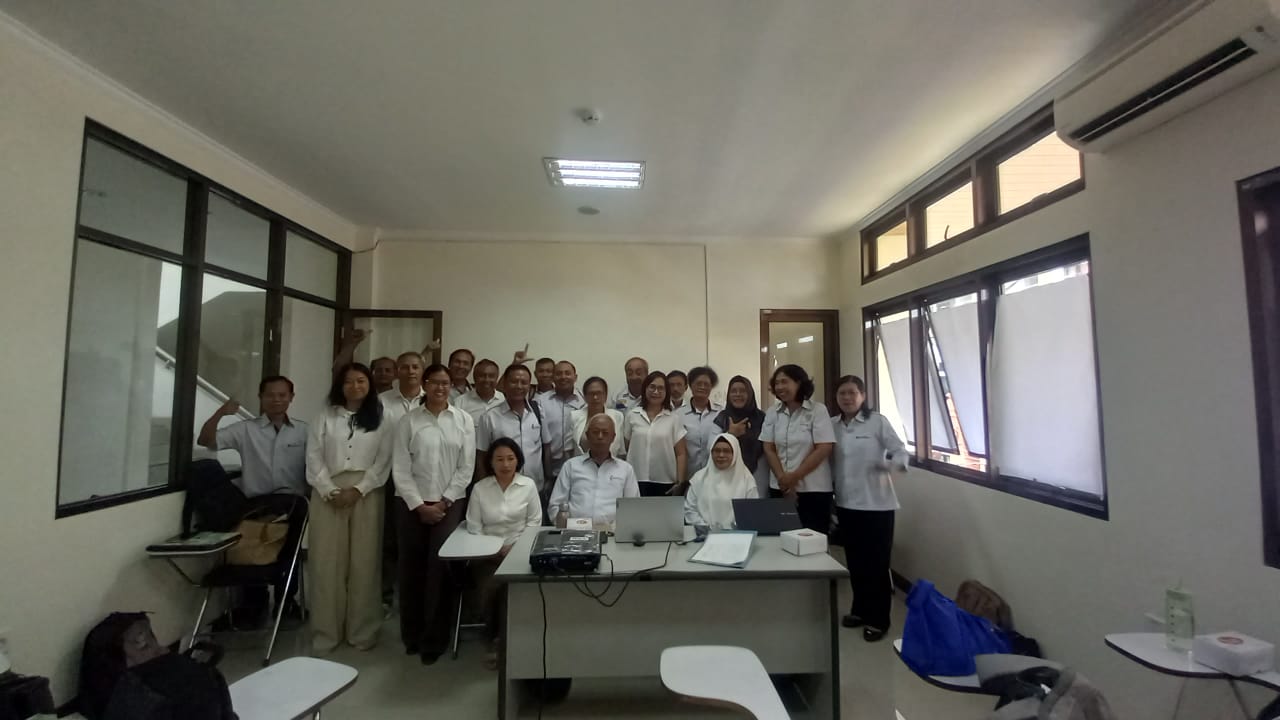
The School of Physics was successfully held. Participants were very enthusiastic and actively participated in the discussions. It is hoped that this activity can continue next year, thus stimulating an optimal academic atmosphere within the Physics Study Program and, more importantly, increasing student and prospective student interest in studying nanoscale materials physics.

FACULTY OF MATH AND NATURAL SCIENCES